Mary Flanagan defines critical play as “stepping in” to a familiar game’s rules so that it forces us to question real‑world issues (Flanagan, 11). In Hack #5, I believe my game Go Fix embodies that intervention perfectly. I borrowed the innocent mechanics of Go Fish and tweaked one crucial rule—pairings, in this case treatment costs—so that the richest players pay less and the poorest pay more. That tiny change shatters the usual fair‑play dynamic and makes every participant feel how easily a system can be built to advantage some and disadvantage others. In other words, Go Fix isn’t just a game I designed; it’s a critical play intervention that makes healthcare inequality impossible to ignore.
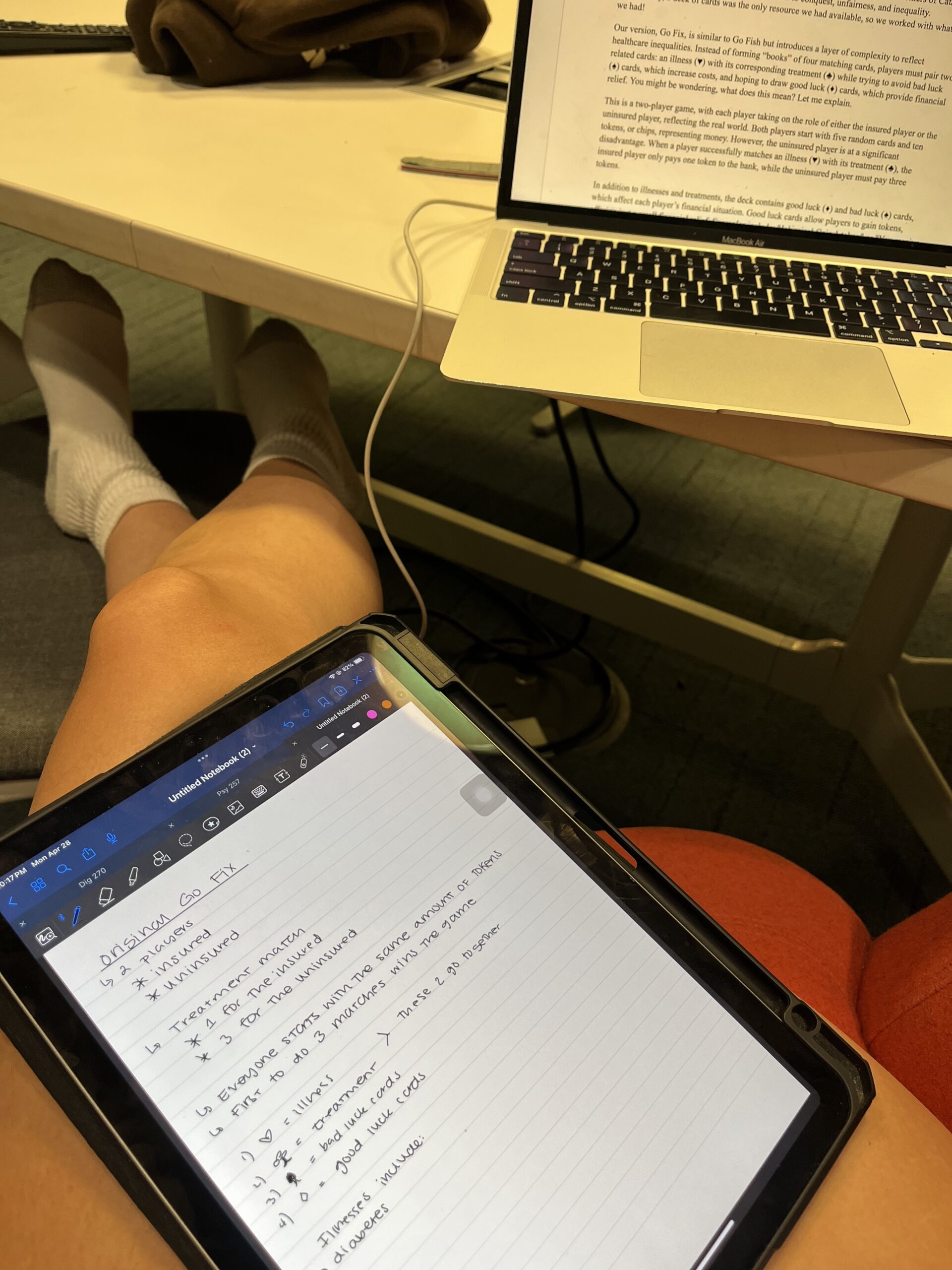
For my final Hack, I decided to release a Beta version of Hack #2, the original critical adaptation of Go Fish. In reimagining this childhood game, I wanted to expose the harsh realities of the U.S. healthcare system through a format that feels familiar yet unsettling. The core mechanic remains simple: we each take turns asking for cards to match illnesses with their corresponding treatments. But in Go Fix, that simplicity masks systemic injustice—depending on the role you choose (insured or uninsured), treatment costs vary dramatically. Insured players pay just one token per match, while uninsured players pay three tokens, mirroring the financial barriers many of us face when seeking basic medical care.
When I began developing the Beta version, I didn’t want to just add more content. I wanted to deepen the emotional impact and realism of the experience, taking Dr. Sample’s feedback on Moodle to heart. The original binary of insured versus uninsured felt too simplistic, so I introduced character roles that reflect real‑world situations. Each character now starts with a different amount of money and pays a different treatment cost based on the quality of their insurance. For example, a CEO pays one token, while a homeless person pays four tokens. By playing these roles, I hope participants truly feel the uneven starting lines that exist in real life.
I also created Good Luck and Bad Luck cards drawn from true healthcare experiences, rather than vague bonuses or penalties. Now when you draw from the event deck, you might face challenges like:
- Losing your job
- Medication not being ready
- Insurance refusing coverage
- Insurance representatives who never answer the phone
Good Luck cards might grant you:
- A timely medication refill
- Access to a cheaper generic version
- Free vaccines, mental health counseling, or dental appointments provided by your employer
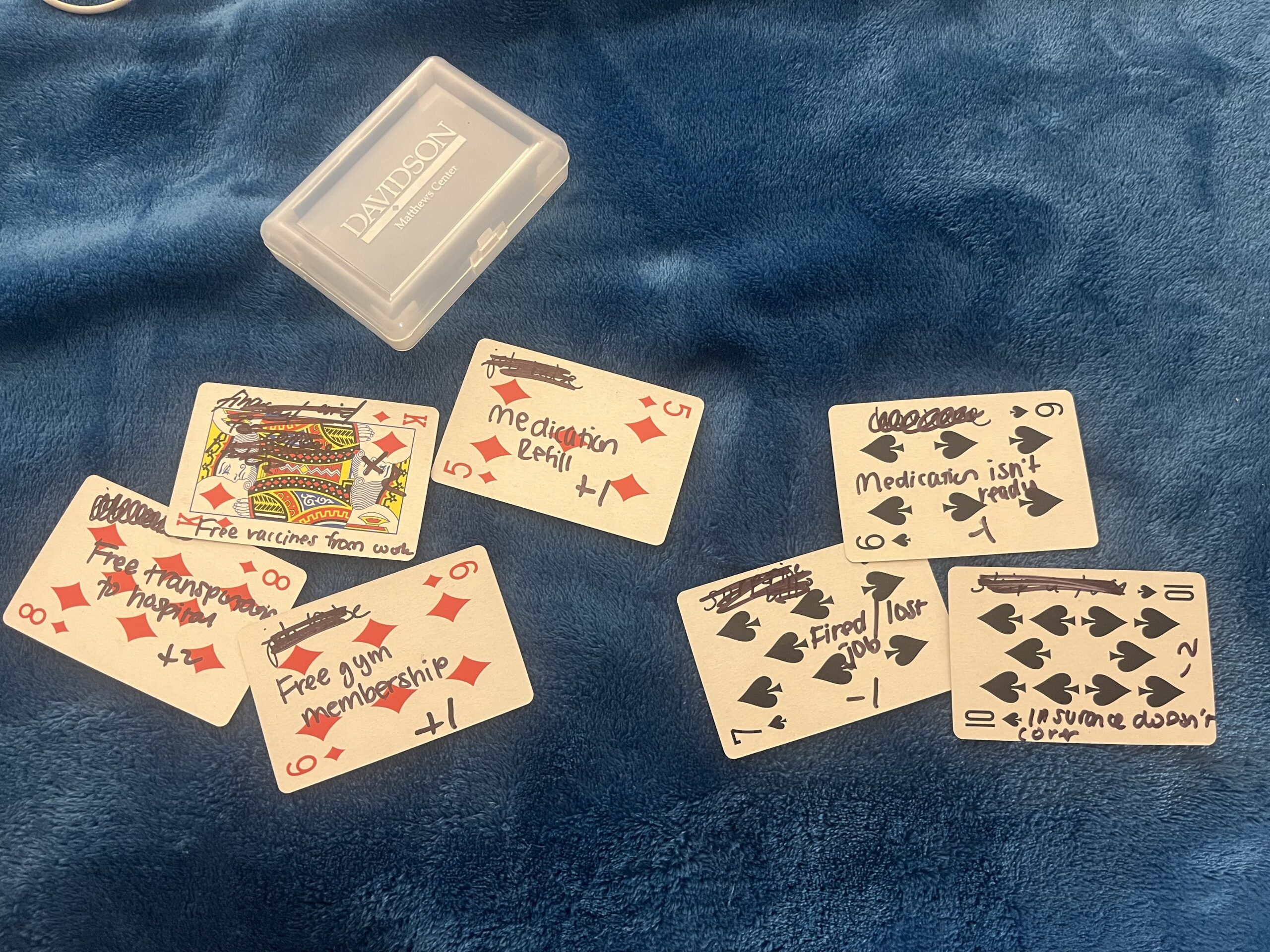
These narrative moments add emotional depth and invite players to reflect on how external factors, beyond anyone’s individual control, shape our access to care. As Miguel Sicart reminds us, “wicked problems have unclear boundaries and no clear solutions; they require the designer to work with the uncertainty that there is no optimal solution, just good enough solutions” (Sicart, 100). That’s exactly why I didn’t aim for “balanced” or “fair” gameplay; instead, I wanted to immerse us in the same ambiguity and compromise built into the U.S. healthcare system.
In this Beta version of Go Fix!, the game ends as soon as someone matches three illness‑treatment pairs—but that doesn’t automatically make them the winner. Once the first player hits three matches, everyone else gets one final turn to improve their standing. To win, you must have at least three matches and the most tokens remaining. This rule evolved from a dilemma Brett and I faced during Hack #2: should the winner be the person who cures the most illnesses or the one who retains the most resources? We realized then, and I hope players realize now, that navigating healthcare isn’t only about receiving treatment; it’s about whether you can afford to keep going afterward.
